1 Start with who you want to reach
Before choosing platforms or tools, answer three plain questions. Who is your ideal customer? What do you offer them? What do you want them to do when they find you: call, send a message, visit, request a quote? Marketing online is easier when these answers are written down in a few sentences. Without them, every channel feels equally urgent and none gets enough attention.
Write your offer so that a stranger understands it in a few seconds. If you cannot say it simply, start by fixing that.
2 Build a home base you control
Social media accounts are useful, but they are spaces owned by someone else, and their rules, reach and layout can change. A website of your own is the one place where you decide what visitors see: what you offer, how to reach you and how you work. It does not need to be big. A clear homepage, a page for each main service and a contact page make a solid start.
Check that it opens quickly on a phone, because that is often where visitors will arrive from.
3 Pick two or three channels, not ten
You do not need to be everywhere. Ask where your customers already look for businesses like yours, and start there.
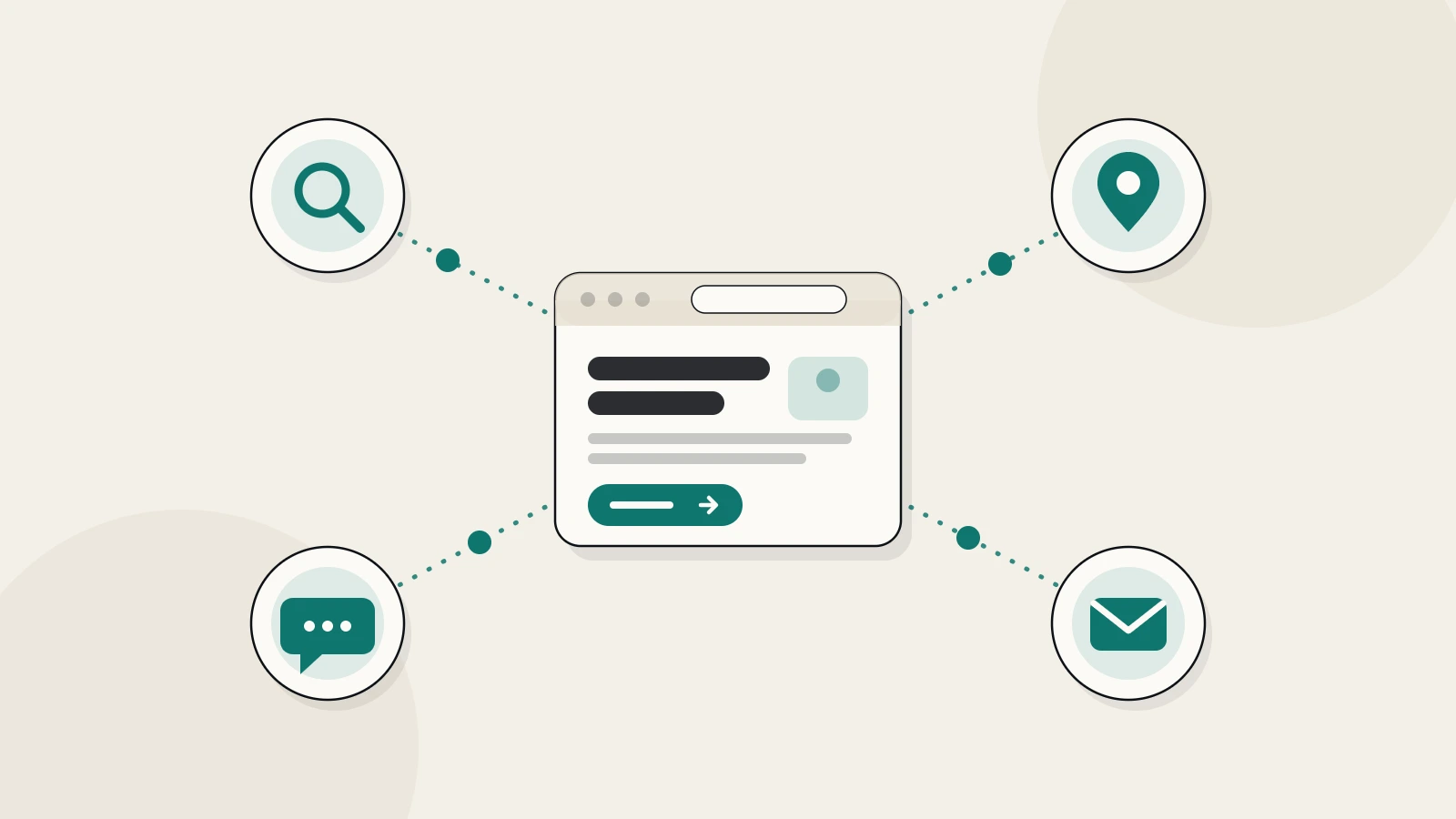
- Search: people type what they need into a search engine. A clear website and accurate business details help you appear at that moment.
- Maps and local listings: if customers come to a place, a complete and accurate business profile on map services helps people find and contact you.
- Social media: useful for showing your work, answering questions and staying visible. Choose the one or two platforms your customers really use.
- Messaging and email: WhatsApp, a phone call or an email list keep the conversation going with people who already know you.
It is better to run two or three channels well than ten badly.
4 Share content that answers real questions
Good content for a small business is rarely clever. It answers the questions customers already ask you: how it works, what to prepare, how long it takes, what the options are. Keep a short list of those questions and turn each one into a post, a page or a short video.
Write in the language your customers use. For many businesses in Morocco that means Arabic and French, and sometimes English. Check that each version reads naturally rather than being a word-for-word copy.
Consistency matters more than volume. A rhythm you can keep every week is better than a burst of posts followed by silence.
5 Make it easy to get in touch
Count the steps between “I am interested” and “I have contacted this business”. Show your phone number, a WhatsApp link or a short form on every important page, and reply promptly. A quick, polite answer often decides whether someone becomes a customer.
6 Measure in a simple way
You do not need a complex dashboard. For each enquiry, note roughly where it came from: a search, a social post, a recommendation, an advert. Review those notes once a month. They show which channel deserves more time and which can wait.
7 Add paid advertising once the basics work
Ads can bring more people, but they also send more people to whatever you already have. If the offer is unclear or contacting you is hard, extra spending mostly adds waste. When the earlier steps work, start small, watch the enquiries and not only the clicks, and increase step by step.
8 A simple 30-day starting plan
- Week 1: write down your offer, your ideal customer and the single action you want people to take.
- Week 2: make sure your website or main page is clear, loads fast on a phone and shows how to contact you.
- Week 3: choose two channels, complete your profiles and list ten questions your customers ask.
- Week 4: publish your first answers, start your enquiry log and review what happened.
After thirty days you will know more about your own market than any general guide can tell you.
In short: a clear offer, a home base you own, a few channels done well, and a record of what comes in.